


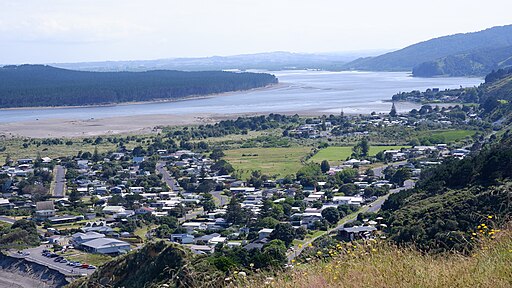
Chemquest
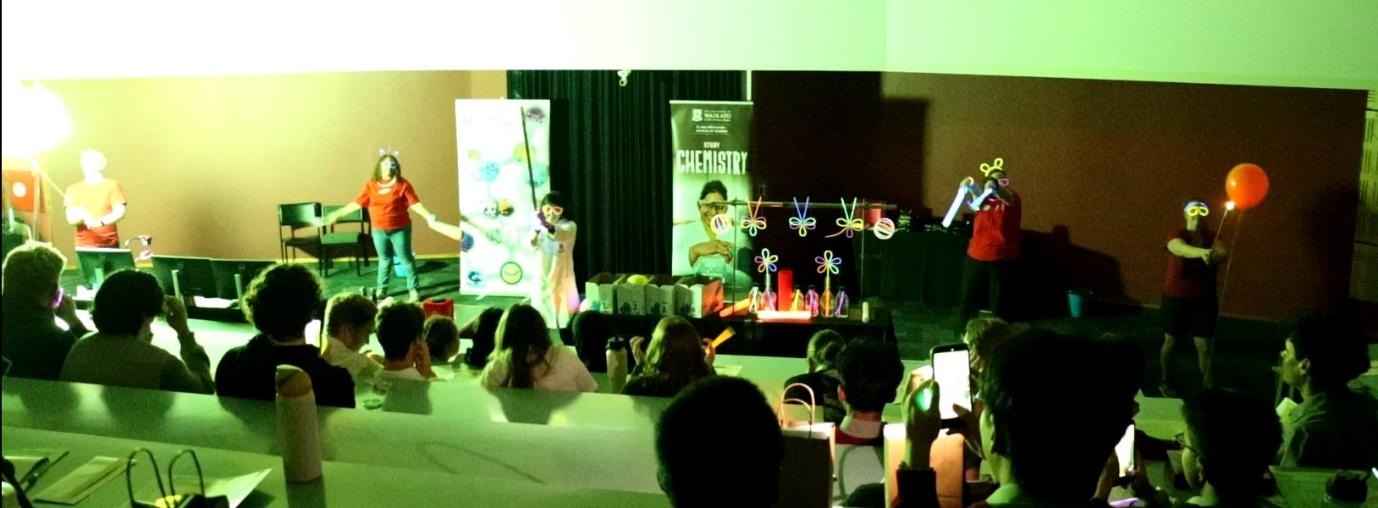
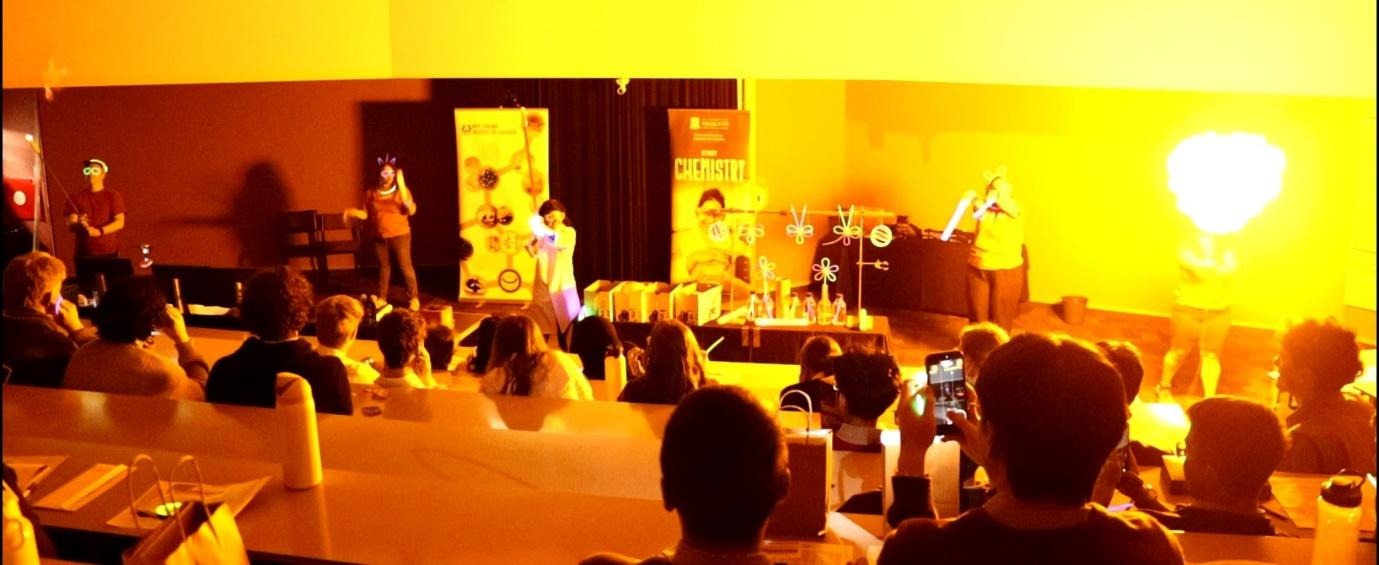
Over 170 students from 20 schools in the greater Waikato and Bay of Plenty region participated in the annual ChemQuest competition, held at the university. This popular event featured music, demonstrations, a “glow show” and combines pop culture with chemistry. Students compete for the ChemQuest trophy and cash prizes. It is a fun-filled evening for students studying NCEA level 2 chemistry and is always a hard-fought contest. The quiz was generously sponsored by the Waikato Branch of NZIC, Hill Laboratories and the School of Science, University of Waikato. Numerous chemistry staff and students contributed to make the event a very successful one.
Prizes were awarded as follows:
1st place: Hamilton Boys' High School, “Who's Gonna Carry The Beakers” (Joseph Guo, Angad Sandhu, Obaidullah Zamen)
2nd place: Hamilton Boys' High School, “Carbon Nitrogen” (TJ Lee, Nathan Rivers, Sean Ryu)
3rd place: Hamilton Boys' High School, “Nobel Gases” (Micah Ennion, Saleh Rishard, Nish Wood)
4th place: Matamata College, “Bond, Hydrogen Bond”, (Mikhaela Banaag, Jaxon Cox-Milne, Ryan Watkins)
5th place: St John's College, “NaBrO 2.0” (Yeonjoon Kim, Alec Fraser-Jones, William Riley)
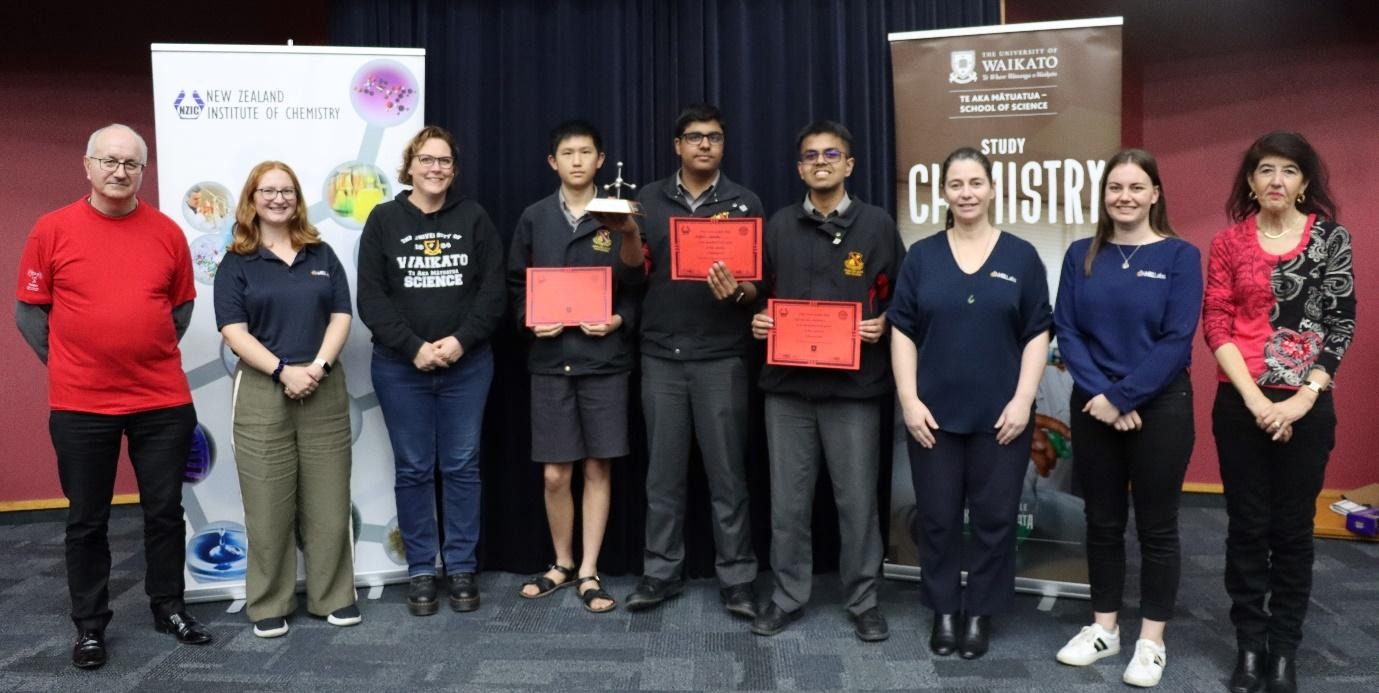
From left: Michael Mucalo (Waikato NZIC Branch President), Amanda Scarlet (Hill Labs), Margaret Barbour (Dean, School of Science), Joseph Guo, Angad Sandhu, Obaidullah Zamen, Rebecca Fitzgerald (Hill Labs), Amanda Shum (Hill Labs), Michèle Prinsep (quiz organiser)



University of Waikato
Congratulations to Amber Bell who won the John Morris Group Award for Most Innovative Chemistry Research presentation at the annual School of Science Postgraduate Conference.
SCION / Bioeconomy Science Institute
Congratulations to Bioeconomy Science Institute PhD student Janet Reid, who won the prestigious Jill Bradley Memorial Award for the second time in October. Named in honour of AgriSea New Zealand founder Jill Bradley, the award recognises outstanding student research in seaweed science. Janet is comparing the reinforcing properties of seaweed-derived nanocellulose with those of wood-derived nanocellulose for applications in wound care and tissue scaffolding. Her PhD research with the Bioeconomy Science Institute and Otago University contributes to the growing body of work exploring sustainable biomaterials for advanced applications.

New biorefinery to create global impact using seaweed

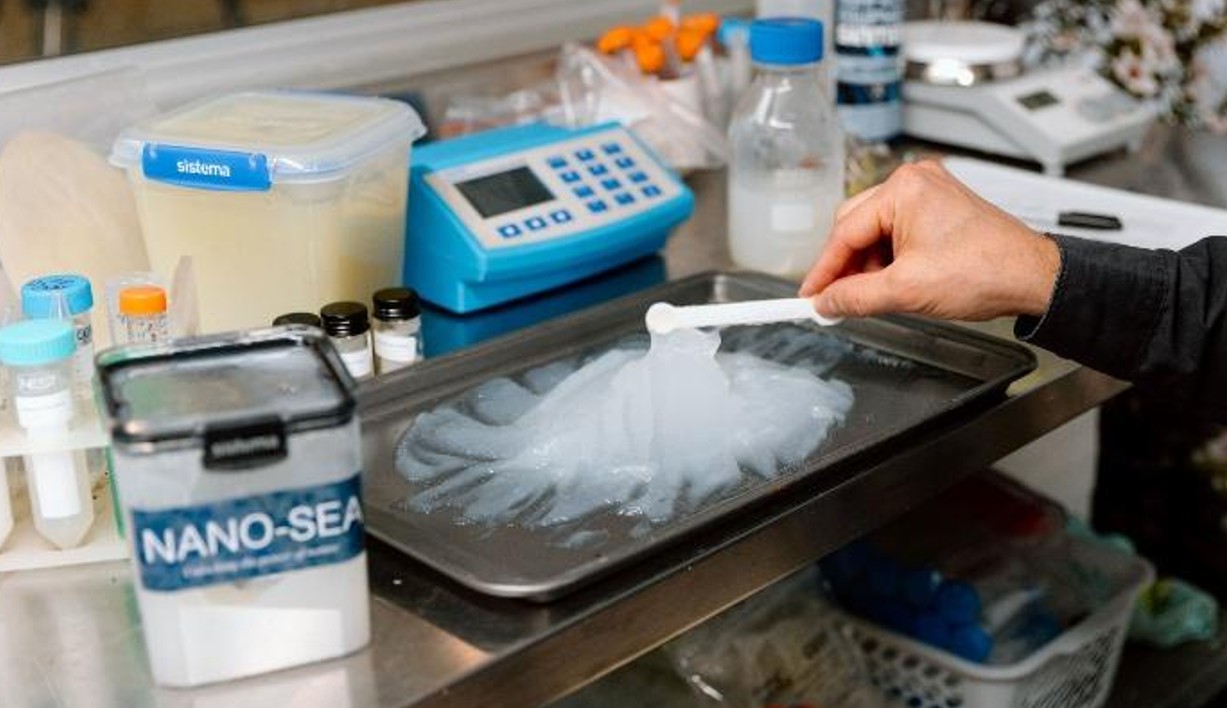
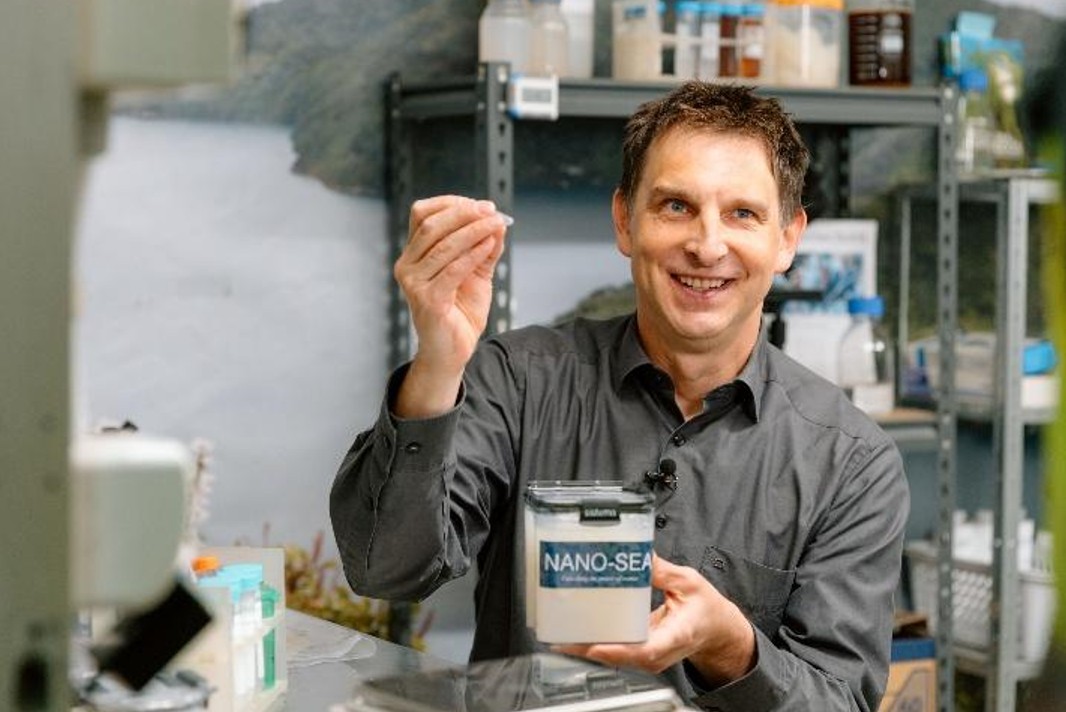
The world’s first commercial seaweed nanocellulose biorefinery, opened in Paeroa, New Zealand on 17 October, will positively impact a range of industries while minimising waste.
The multi-million-dollar biorefinery, owned by family company AgriSea, will convert seaweed left over from the biostimulant production process into nanocellulose hydrogel that can be used for medical, agricultural, manufacturing and cosmetic purposes. Nanocellulose is a highly versatile material with exceptional properties, making it valuable in various applications. Most of the world’s nanocellulose is produced using chemically treated wood pulp. Now, AgriSea and the Bioeconomy Science Institute have collaborated to create this material from seaweed.
AgriSea chief executive Clare Bradley says seaweed offers a surprising advantage over traditional wood-pulp sources. “Its cellulose chains are up to four times wider and longer, giving the resulting hydrogel twice the thermal conductivity of plant-based equivalents. The extraction process uses non-aggressive chemicals compared to those usually used to produce nanocellulose, making it significantly more workplace and environmentally friendly.
“The finished material, an opaque gel, is stronger than steel and can absorb greater than 100 times its mass in water.”
The biorefinery can produce up to 1600kg of eco-friendly nanocellulose hydrogel a week. This hydrogel can be used for advanced wound dressings and drug delivery, in agriculture to improve seedling survival thanks to its water-retentive properties, and as a potential biodegradable performance material for adhesives, batteries and electronics manufacturers. Cosmetics companies also see it as a renewable cream base.
For AgriSea, the biorefinery is the next chapter in a 30-year journey producing seaweed-based bio-stimulants for agriculture. Until now, the fibrous residue from the company’s brewing process had limited value. By transforming it into nanocellulose hydrogel, the company is creating revenue streams while eliminating waste.
Backed by the Ministry of Business, Innovation and Employment to deliver regional jobs, the new plant is a flagship facility for New Zealand’s aquaculture sector. It can process a wide range of local seaweeds and has already trialled species from around the world – opening the door for New Zealand to take a leading role in global markets. The technology also creates multiple pathways for growth: the ability to contract-manufacture nanocellulose for other industry players, sell its own high-value materials into global markets or license the process to seaweed farmers in other countries. This flexibility strengthens New Zealand’s position as a leader in sustainable ocean-based innovation.
Florian Graichen, the Bioeconomy Science Institute’s Forests to Biobased Products general manager, says the biorefinery is a textbook example of New Zealand’s circular bioeconomy in action. “This partnership has led to a blueprint for ocean-based green technologies that could help global industry transition from fossil-derived materials, while minimising waste and revitalising local economies.
The potential market is enormous. The global seaweed cultivation industry is projected to reach US$69.5 billion by 2034. The broader biorefinery market is forecast to expand at nearly 8% annually, topping US$392 billion in the next 10 years.
“This shows what can be achieved through collaborative research.”


