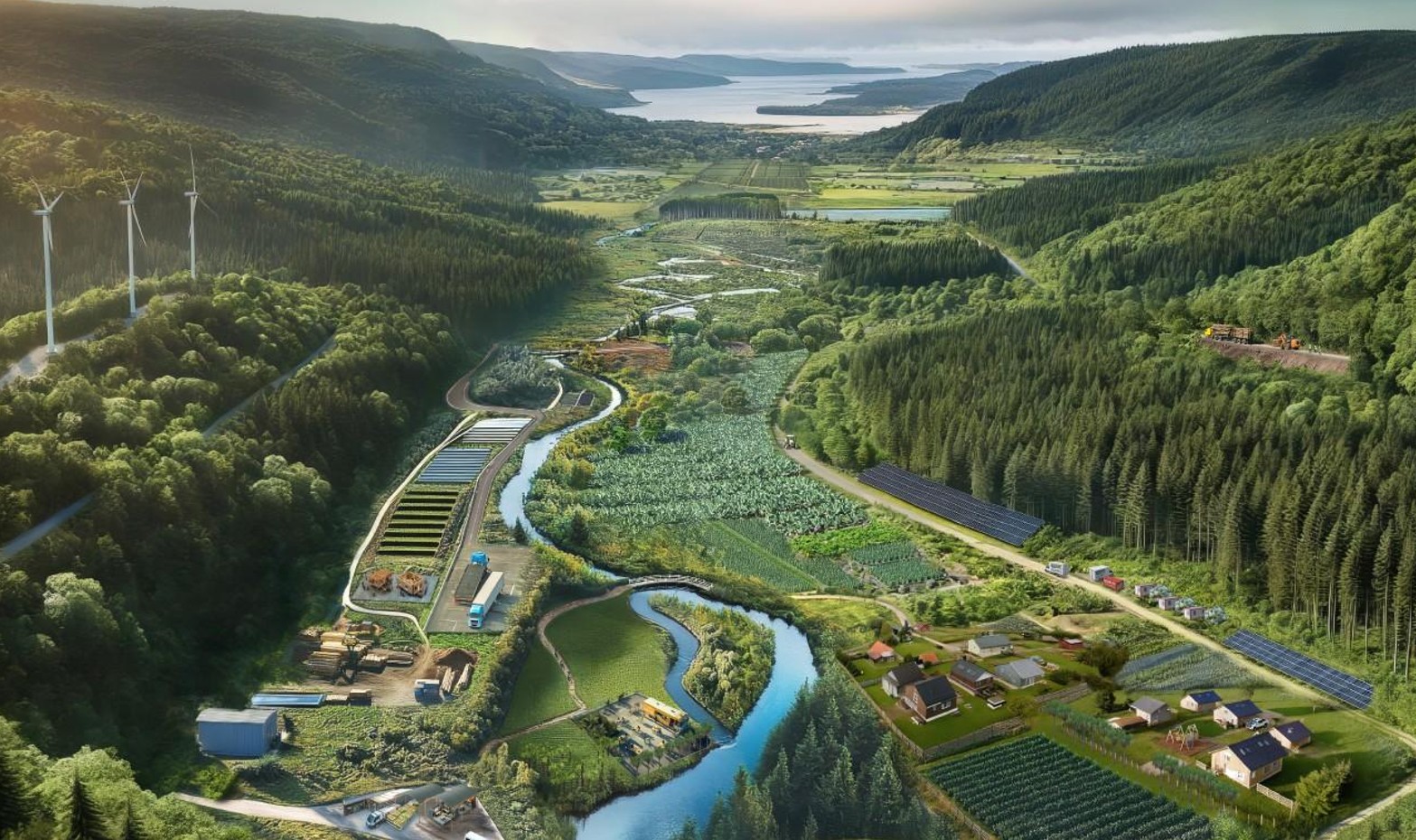
The Bioeconomy Science Institute Maiangi Taiao’s partnership with the Utakura 7 Incorporation aims to create an environment with sustainable housing, renewable energy, food security and economic opportunities where residents can thrive.
A government funding announcement has recognised the Bioeconomy Science Institute Maiangi Taiao’s focus on supporting and advancing Māori research.
Seven of its research programmes – spanning its land, plant, food and forestry scientific areas – have each received $350,000 in the latest round of the 2026 Rangapū Rangahau round of the He Ara Whakahihiko Capability Fund.
The Rangapū Rangahau Fund supports collaborative, two-year projects aimed at building Māori research capability and durable partnerships between Māori-facing organisations and the wider science, innovation and technology (SI&T) system – with a focus on economic and environmental outcomes. Projects are expected to align with mātauranga Māori, taiao (environmental guardianship) and indigenous innovation principles.
Bioeconomy Science Institute Chief Indigenous Innovation and Partnerships Officer Stacey Whitiora says the funding announcement recognises the organisation’s commitment to strengthening Aotearoa New Zealand’s Māori research capability and building new connections to help advance science that benefits all New Zealanders.
“Our Māori name – Maiangi Taiao – reflects our commitment to working alongside Māori, and to science that creates enduring opportunities for future generations. Māori hold a wealth of knowledge about our environment and have a strong connection to the land,” she says. “Their insights are integral to our research, so continuing to develop meaningful partnerships with Māori is a priority for us.”
The programmes receiving funding are:
Te Wai Haapuapua: economic opportunity and climate resilience in Te Puuaha
In partnership with Waikato-Tainui, this project centres on Te Wai Haapuapua, a te ao Māori implementation of paludiculture (wet farming), as a way to create economic and cultural resilience to climate change while protecting ecological heritage. Together we aim to empower Māori landowners and marae to plan for climate change impacts that will affect Te Puuaha / the lower Waikato River.
Te Tātai Raraunga – understanding how the lunar cycle can shape improved horticulture production systems
This innovative programme in Wairoa, a partnership with Tātau Tātau Horticulture (Haumako), blends traditional Māori knowledge with modern science and data systems to transform how apples are grown. Haumako seeks to be a horticultural leader by integrating Mātauranga, contemporary scientific knowledge and operational best practice across their orchards. By applying the natural cycles of the moon and environment unique to Wairoa, we will test new ways to manage pests and diseases in apple orchards – leading to healthier orchards, reduced spray use, better environmental outcomes and a stronger, future-focused Māori economy.
Relocatable harakeke processing platform for rural economic transformation
In partnership with the Utakura 7 Incorporation, this will involve working with harakeke, which has potential for use in high-value applications such as healing gels for skincare and traditional medicine. The project utilises a science-based platform to turn harakeke research into real-world processing capacity. The two-year project will see traditional knowledge holders working with processing technologists to preserve mātauranga Māori while developing specialised technical skills. It could serve as a template for other remote and indigenous communities globally, positioning New Zealand as a micro-enterprise innovation hub.
From farming to bioactives: Diversifying Wharekauri land use opportunities
Working in partnership with the Maipito Hough Whānau Trust, this project investigates the potential of Tarahina – a native plant abundant in the Chatham Islands (Wharekauri) – for use in natural bioactives such as plant-based antimicrobials and antioxidants. Global interest in natural bioactives is growing but scientific knowledge of Tarahina is limited and the research will explore whether it could support a whānau-led value chain.
Following Māori traditions: a pathway to high-value, zero-waste food products from karaka
Karaka is a culturally significant species for Māori. Historically, the detoxified kernel and ripe orange fruit flesh were consumed, but neither is currently used commercially because of safety concerns and lack of regulatory approval. The project addresses this gap by reclaiming and reimagining a traditional Māori food. It develops a framework for production of high-value products. Led by the Tanenuiārangi Manawatū Charitable Trust (TMCT) in partnership with the Bioeconomy Science Institute (BSI), the project integrates mātauranga Māori with food science to co-develop Food Safety Australia and New Zealand-compliant protocols.
Tohe te Tohe – Using water sensor networks to inform Toheroa management practice
The Bioeconomy Science Institute is partnering with Te Runanga o Te Rarawa and the hapū and iwi of Te Oneroa a Tōhe | Ninety Mile Beach to help restore Toheroa (a native clam and ngā iwi of Te Hiku ō Te Ika kaimoana taonga species) at numbers not seen since the early 1900s. Understanding how freshwater moves through and over the land to reach the ocean will inform wider discussions on water allocation and movement – to improve decisions that affect coastal and groundwater-dependent industries, support sustainable Toheroa stocks and help restore the mauri of the beach.
The programme complements the current NZ-NASA research partnership project; Satellite multi-scale hydrologic framework for Te Hiku ō Te Ika Wairere Ngahere. This uses NASA satellites to better understand the hydrology and water use across Te Hiku | the Far North region in the face of climate change.
Enhancing the consistency, quality and effectiveness of high-value indigenous bioactive products
Global demand for functional ingredients and wellness solutions is rising. This presents a major opportunity for Māori landowners, who can create high-value products by leveraging traditional knowledge and the bioactive properties of indigenous plants. The Bioeconomy Science Institute has partnered with Wakatū Incorporation to develop a reproducible and scalable process that will optimise the potency, safety, and quality of products containing kawakawa and horopito. Once proven, this process can be extended to other indigenous species and provide viable pathways to market for Māori enterprises.
The He Ara Whakahihiko Capability Fund supports economic growth by investing in and growing Māori science, innovation and technology by strengthening the capability, capacity, skills and networks between the Māori economy and the SI&T system.
All contracts started on 1 June 2026 and end on 31 May 2028.