Introduction
Fossil fuels continue to be the primary source of energy worldwide. However, the depletion of fossil fuel resources and the ongoing increase in greenhouse gas emissions are global concerns that threaten energy security and have climate impacts.1, 2 Renewable energy sources such as wind, solar, hydro, geothermal, and biogas have much lower life-cycle greenhouse gas emissions than fossil fuels.3 Among these, biogas is distinctive: beyond displacing fossil fuels, it also prevents emissions directly when produced from organic waste, such as manure, landfilled waste, or wastewater sludge, that would otherwise decompose and release methane, a potent greenhouse gas, into the atmosphere.4 The biogas and biomethane market is expanding quickly. Global biomethane production is growing at around 20% a year, driven by high natural gas prices and more than 50 new supporting policies introduced since 2020. Europe and North America together still account for over 60% of global demand, but growth is increasingly concentrated in emerging economies: China's biomethane output is projected to rise from 1 to 15 billion cubic metres by 2035, while demand in India and Brazil is set to grow sevenfold over the same period.5
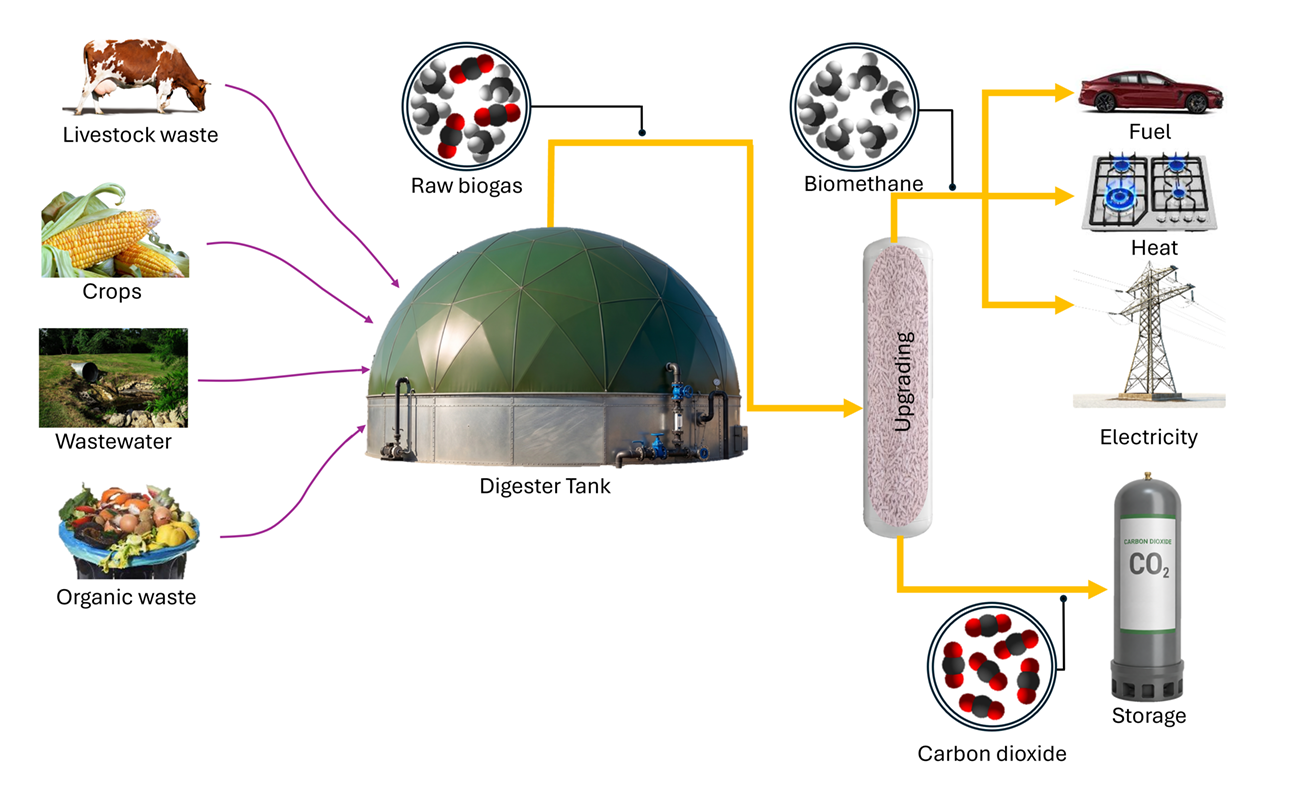
Raw biogas is generated via the anaerobic digestion of organic matter, broken down in several steps by different types of microorganisms, and consists primarily of methane and carbon dioxide alongside trace impurities. Its exact composition depends on the feedstock, digestion conditions, and level of contamination. In practice, raw biogas is not suitable for direct use because its methane content is too low and its impurity profile varies too much.6, 7
Biogas sources
There are three main biogas sources:
- Landfill gas is produced by the anaerobic decomposition of organic waste in municipal solid waste landfills. It mainly consists of methane and carbon dioxide, and usually also contains nitrogen and oxygen from air that seeps into the landfill gas during its recovery.8, 9 Volatile siloxanes are also generated from the degradation of consumer products.
- Municipal wastewater treatment plants produce biogas when sewage sludge is broken down in an oxygen-free digester by microorganisms.10
- Anaerobic digesters convert agricultural wastes such as animal manure, food scraps and crop residues into biogas through microbial decomposition in oxygen-free conditions. These systems are widely used at farm scale for renewable energy production, waste management, and fertiliser recovery.11 Biogas can also be produced from other feedstocks, such as agrifood industry residues (e.g. processing by-products and effluents) and household organic waste.12
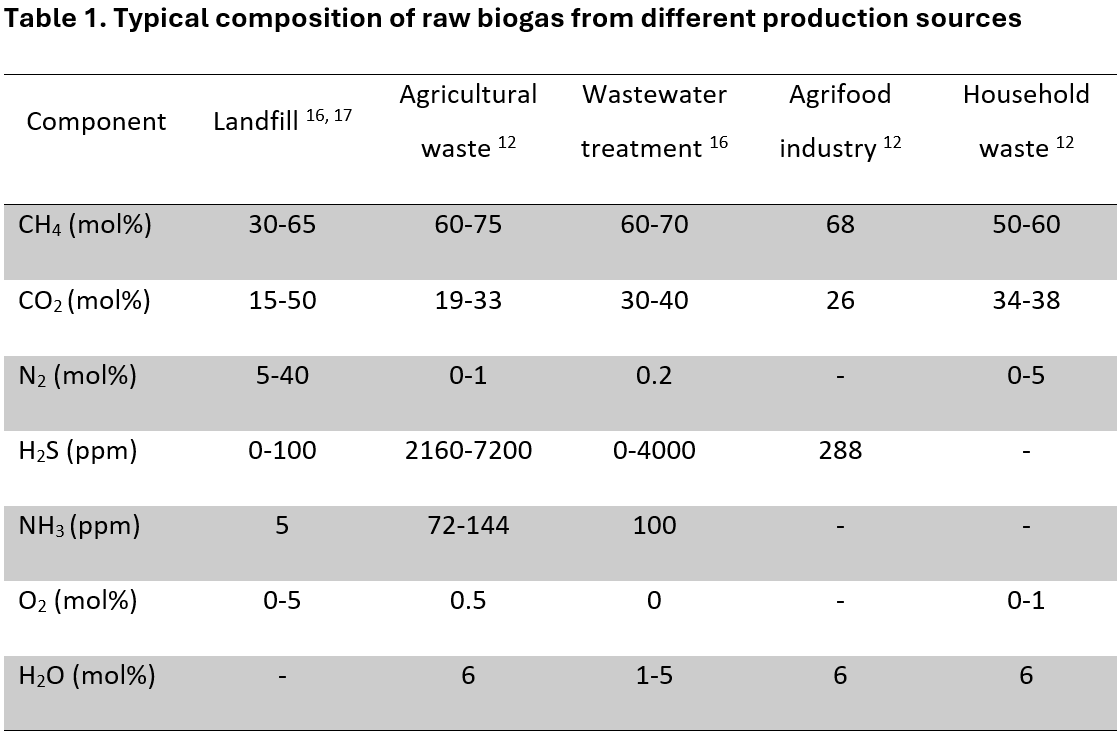
The resulting composition of crude biogas varies by feedstock (Table 1) but typically consists of 50–70% methane and 30–50% carbon dioxide, along with lower concentrations of sulfur species, water vapor, oxygen, nitrogen, ammonia, siloxanes, VOCs (volatile organic compounds), and halogenated compounds.13-16
Biomethane upgrading
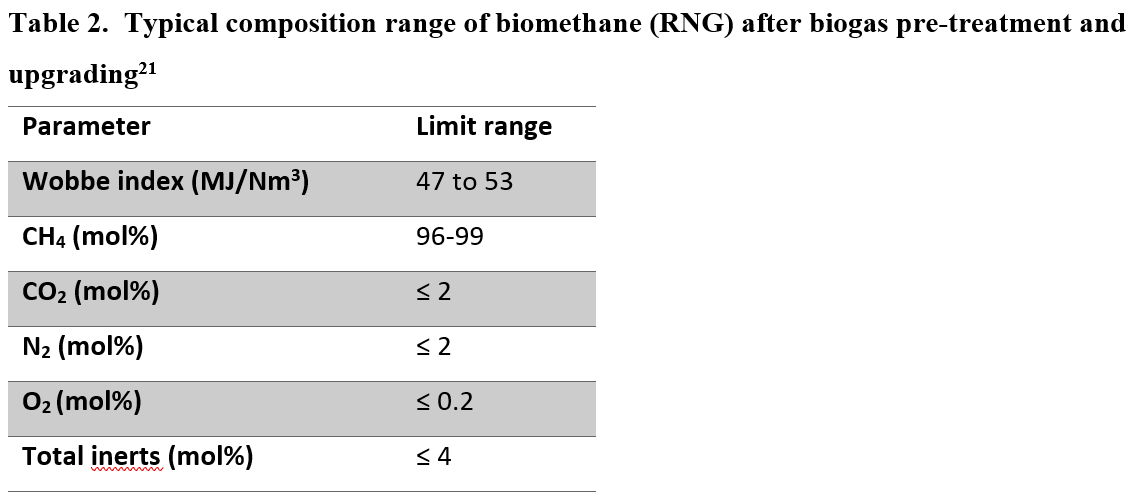
Beyond methane and carbon dioxide, the trace components identified in Table 1 must be reduced before biogas can be safely injected into natural gas pipelines or used in standard appliances, which require it to meet strict purity and Wobbe index parameters (Table 2). The Wobbe index describes the quality of fuel gases and is used to compare the energy content of different fuel gases based on their heating value and density. A higher Wobbe index means that the gas delivers more energy through the same burner.
The components in Table 1 matter at different points in the utilisation chain: carbon dioxide lowers heating value, hydrogen sulfide causes corrosion, water vapor causes condensation and freezing, siloxanes form silica deposits during combustion, and oxygen and nitrogen reduce methane purity, VOCs and halocarbons may raise environmental and toxicity concerns, and particulates can clog equipment and damage compressors or engines. Because of this, biomethane production should be seen as a gas conditioning process rather than only a carbon dioxide separation step.4, 13-16, 18, 19
Biomethane is biogas upgraded to match the quality of natural gas and is often referred to as renewable natural gas (RNG). Fuel-quality specifications for biomethane vary slightly between countries and grid operators, but all aim to ensure it behaves similarly to fossil gas in terms of energy content and operational safety. Meeting these specifications is therefore the critical final step of biogas upgrading, before injection into pipelines or use as RNG.16, 20 21
Biogas treatment is usually divided into two stages: pretreatment, which removes trace components; and upgrading, which primarily removes carbon dioxide and, in some cases, nitrogen or oxygen, to bring the gas to specification. Technology selection for each stage is highly site-specific and must consider local conditions, end-use requirements, and regulatory constraints.4
Contaminants are removed in a coordinated sequence, since each poses a different risk and is best addressed at the point in the process where removal is most efficient and downstream equipment is best protected.22 Pretreatment typically begins with bulk water removal (dehumidification) and particulate filtration. This is usually followed by removal of H2S, VOCs, and siloxanes.23-25 Upgrading then follows, with CO2 capture raising the methane content to the desired specification; if N2 and O2 are present, they are removed either alongside the CO2 or in a separate polishing step.22 In the following sections, we focus on the removal methods of various non-CH4 components of crude biogas.
CO2
Carbon dioxide is the principal target in biogas upgrading because it is the largest non-methane component in most raw gas streams.26 Commercially established options include water scrubbing, chemical scrubbing with amines or other solvents, pressure swing adsorption, membrane-based systems, and cryogenic separation (see later). Biological upgrading, especially hydrogenotrophic methanation that converts CO2 into CH4 rather than separating it, is a potential future option.14, 16, 19, 27, 28
H2O
Water vaour must be removed from biogas because it causes condensation, corrosion, pipeline blockage, and freezing in cold climates. Moisture also interferes with upgrading technologies such as adsorption systems and membranes, reducing process efficiency. As a result, drying is usually one of the first treatment steps before fine upgrading.14-16, 18 Common technologies for moisture removal include cooling and condensation, refrigeration, adsorption dryers, and membrane drying units. Cooling is the simplest method because water condenses when gas temperature falls below its dew point. The gas leaving a cooling and condensation system contains a reduced water vapor content but is typically still saturated at the outlet temperature and may require further treatment to achieve lower moisture levels. Desiccants such as silica gel, activated carbon or molecular sieves can remove deeper levels of moisture. These materials are usually regenerated by e.g. heating or a decrease in pressure.15, 18, 19
H2S
Hydrogen sulfide is toxic, corrosive, and harmful to engines and upgrading equipment. Even moderate levels of H2S can lead to sulfuric acid formation in the presence of moisture, causing rapid corrosion. For this reason, H2S removal is usually required before or during upgrading.14, 15, 18, 19, 27 The main H2S removal technologies include iron oxide media, activated carbon, zinc oxide, liquid scrubbing, biological desulfurisation, and microaeration. Solid scavengers such as iron sponge and impregnated activated carbon are widely used because they are simple and effective. Water scrubbing is also a common treatment method since H2S is soluble in water, but it is usually not enough on its own for high-sulfur gas streams.16, 18, 19, 27
NH3
Ammonia removal is commonly achieved by water/acid scrubbing or adsorption on acidic materials. Since ammonia is highly soluble in water, wet scrubbers can be effective, but applications requiring very low residual ammonia levels, such as to meet strict biomethane injection specifications, may need an additional dedicated polishing step.13, 18
Siloxanes
Siloxanes can be found in biogas from sewage sludge treatment plants and in landfills. When siloxanes are burned, silicon dioxide is formed which can create problems in gas engines. The main siloxane removal methods are activated carbon adsorption, silica gel, alumina-based adsorbents, chilled condensation, and sometimes cryogenic systems. Activated carbon is one of the most common solutions because it is effective and practical. Since it eventually saturates, it must be replaced or regenerated periodically. In some cases, siloxane removal is combined with H2S and VOC polishing in a single integrated treatment step, for example, a shared activated-carbon bed, to protect sensitive end-use equipment.13, 15, 18, 19
VOCs
Volatile organic compounds and halocarbons are trace contaminants that may originate from waste inputs, industrial materials, or landfill sources. Although they are often present at low concentration, they can create air pollution issues, odour problems, and toxicity concerns. Some compounds can also damage catalysts and adsorbents or contribute to harmful combustion by-products.13, 14, 18 Activated carbon, biofiltration, thermal oxidation, and advanced adsorption systems are commonly used for VOC and halocarbon control. For deep purification, these contaminants are often removed as part of a multi-stage cleanup train together with sulfur and siloxanes.14, 15, 18 Biological treatment can also contribute to VOC degradation under suitable conditions.29
Particulates
Particulate matter may include dust, biological solids, aerosols, and fine droplets carried over from digestion or gas handling systems. Even though particulate levels may seem minor, they can clog filters, foul adsorbents, and cause mechanical wear in gas engines and gas turbines.15, 18, 19 The most common particle control methods are cyclones, fabric filters, cartridge filters, and coalescing filters. In wet systems, droplet separators and mist eliminators may also be required. These methods are usually inexpensive, but they are essential for protecting the rest of the process.18, 19
O2 and N2
Oxygen and nitrogen are generally present in low concentrations, but they can become important in landfill gas or when air leaks into the system. These gases lower methane purity and may make the biomethane fail pipeline specifications.
The best method is preventing these contaminants from entering the biogas stream by precisely tuning wellfield vacuum pressure in landfills to minimise air infiltration and N2/O2 contamination. Both compounds are difficult (i.e. expensive) to remove, hence their presence should be avoided unless the biogas is used for combined heat and power systems (CHPs) or boilers. Nitrogen is particularly difficult to remove because it behaves similarly to methane in many separation systems.14-16, 27
Standard CO2 upgrading technologies are poorly suited to removing N2 and O2. Water scrubbing is ineffective because these gases are not soluble in water; amine scrubbing is ineffective because they do not react with amines; and membrane separation is ineffective because nitrogen's molecular size is too close to methane's, causing excessive methane loss and reduced efficiency. Oxygen can be removed separately before the main CO2 upgrading step, often using catalytic oxidation (the DeOxo process), where the gas is heated and passed over a palladium or platinum catalyst so that oxygen reacts with a small portion of methane to form carbon dioxide and water (CH4 + 2O2 → CO2 + 2H2O), which consumes some valuable methane but is highly effective; very low trace oxygen can also be removed by biological scrubbers where aerobic bacteria consume oxygen while breaking down H2S. They can also to some extent be removed in desulfurisation processes or in some of the biogas upgrading processes.4
When both nitrogen and oxygen must be removed to meet strict pipeline conditions, a Nitrogen Rejection Unit (NRU) is added at the end of upgrading. This uses pressure swing adsorption with carbon molecular sieves or specific zeolites that rely on kinetic separation to trap faster-moving N2 and O2 while letting methane pass. Alternatively, cryogenic distillation that super-cools the gas so methane liquefies around −162°C while nitrogen and oxygen stay gaseous down to -196°C and -183°C respectively and can be vented, though these systems are expensive and energy intensive, so they are mainly used when strict product specifications justify the cost.14-16
Biogas upgrading technologies
Membrane separation
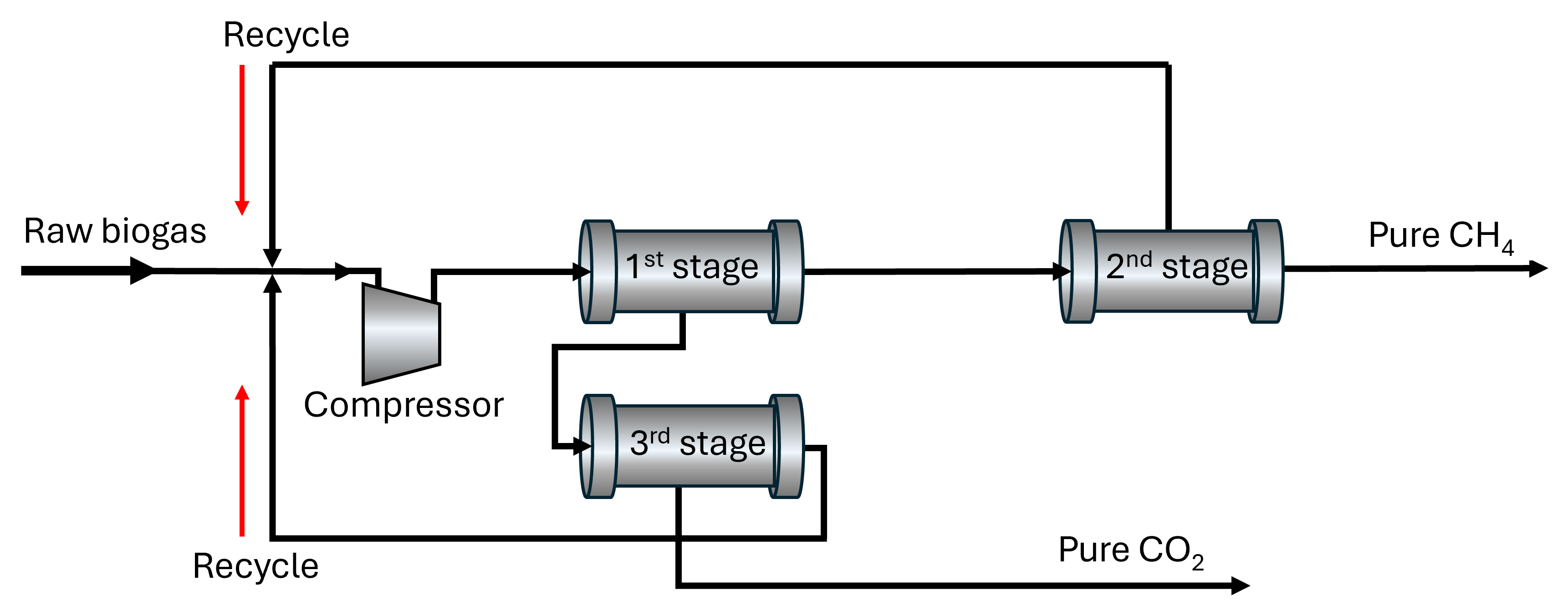
Membrane separation relies on selective permeation: under pressure, CO2 passes through a polymeric membrane, commonly polyimide, polysulfone, or cellulose acetate, considerably faster than CH4, concentrating methane in the retentate while CO2 is enriched in the permeate stream (Fig. 2). As with other upgrading technologies, the biogas is first dehumidified and desulfurised to prevent corrosion, then compressed to 5–20 bar before entering the membrane unit. Because membrane modules are compact and can be scaled incrementally by adding further units, the technology is well suited to small and medium-sized plants and space-constrained sites.14, 19, 27, 28

A single membrane stage cannot simultaneously achieve high methane purity and high recovery, so commercial systems typically use two or three stages in series (Fig. 3). In the most common three-stage configuration, the first stage removes the bulk of the CO2, the second raises biomethane purity to the required specification, and the third recovers residual methane from the CO2-rich stream; the permeate from the second stage and the retentate from the third are recirculated back into the process to limit methane losses. This configuration can achieve methane recovery of up to 99% and purity above 96%.30, 31
The main drawbacks of membrane systems are the pretreatment burden noted above, membrane fouling and periodic replacement costs, and the energy penalty from compressing the recycle streams needed to keep methane losses low.6, 14, 26, 27, 32
Adsorption separation
Adsorption is another technology widely used in biogas pretreatment, upgrading, and post-treatment because it can remove impurities such as H2S, VOCs, moisture, and CO2 with relatively moderate energy use and good performance. Adsorption represents one of the most heavily researched upgrading pathways, leveraging specific physical parameters to capture CO2.
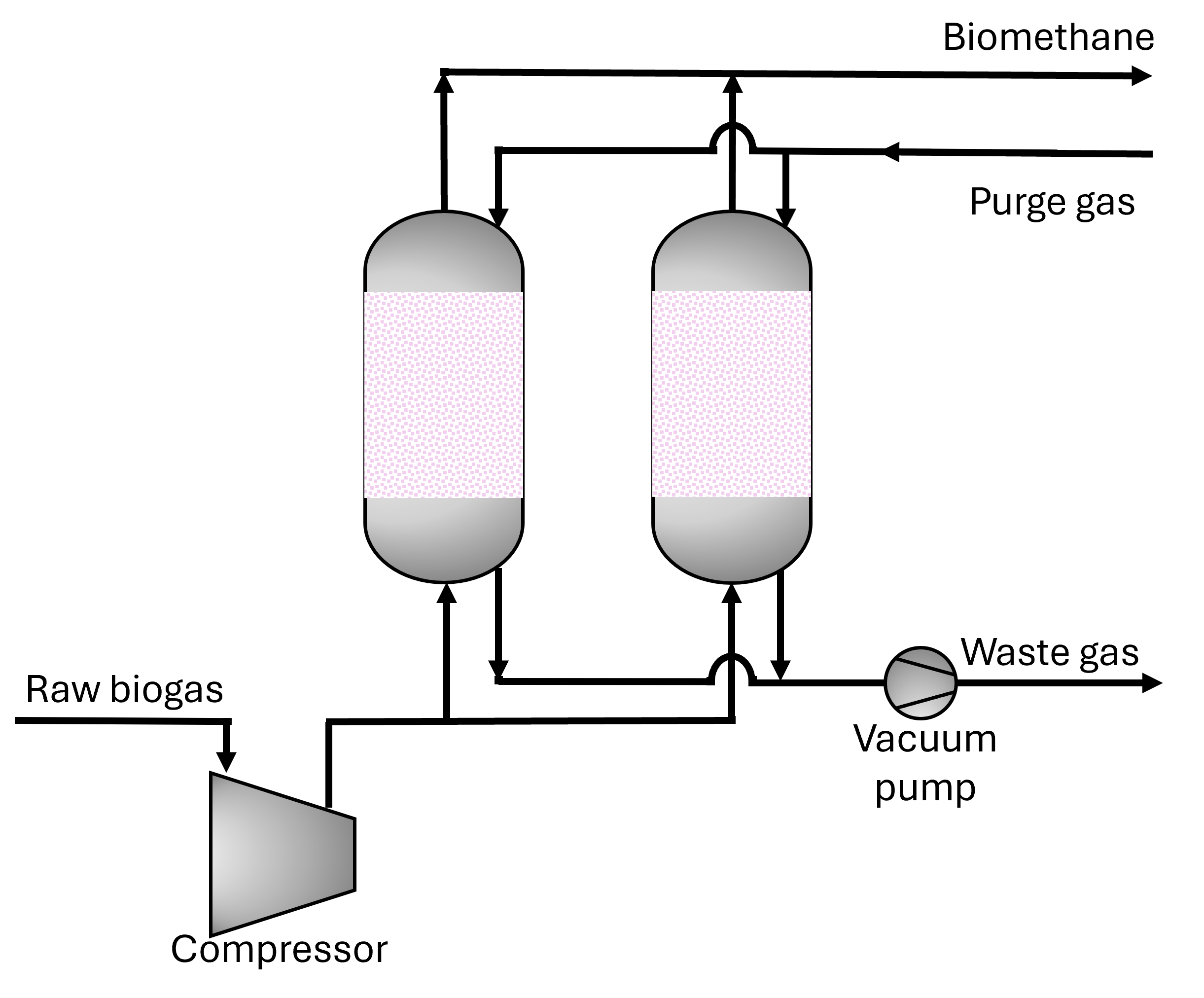
Its most established application is pressure swing adsorption (PSA), a physical separation process in which CO2, water vapour, and other impurities are selectively adsorbed onto porous solid adsorbents under high pressure and desorbed under low pressure or vacuum, while CH4 passes through as the product gas (Fig. 5). Due to its chemical-free operation, relatively low energy demand, and ability to produce high-purity biomethane, PSA is considered one of the most mature and widely implemented biogas upgrading technologies.33, 34
The performance of adsorption-based upgrading is fundamentally governed by the choice of adsorbent material. Conventional materials such as zeolites, activated carbon, and carbon molecular sieves continue to dominate industrial applications, while emerging materials such as MOFs and sustainable biochar offer promising alternatives due to their high selectivity, tunable structures, and environmental benefits. In particular, the development of low-cost biomass-derived adsorbents supports the transition toward more sustainable and circular upgrading processes.26, 35
Current efforts aim to minimise the number of pretreatment, upgrading, and post-treatment steps in biomethane production, reducing both cost and energy demand. Multi-layer adsorption is one industrially established way to do this: commercial PSA units commonly place a silica gel or alumina layer at the front of the vessel to remove water vapour, followed by a carbon molecular sieve (CMS) or zeolite layer that selectively adsorbs CO2, consolidating drying and CO2 removal into a single unit. Hydrogen sulfide is typically removed in a separate upstream step, most often using activated carbon impregnated with copper or zinc compounds, since H2S can damage CMS and zeolite adsorbents if not reduced beforehand. Research into adsorbents capable of removing H2S and CO2 simultaneously in one step is ongoing. For example, MUF-16 (Massey University Framework), a MOF now in commercial development for industrial CO2 capture and biogas upgrading at Captivate Technology, has demonstrated structural stability in the presence of H2S, and recent computational work has modelled its competitive adsorption behaviour in CO2/H2S-containing gas mixtures, suggesting it could be a promising candidate for simultaneous CO2 and H2S adsorption in biogas upgrading.36
Beyond individual materials like MUF-16, broader advances in adsorbents and column design are needed to make PSA/VSA more competitive for biogas upgrading. Advanced materials with higher durability offer one path forward, but the sorbent format is equally important. Structured adsorbents, in which the active material is coated or shaped into engineered geometries such as monoliths or laminated sheets rather than packed as loose pellets or beads, can improve gas flow uniformity and mass transfer rates while reducing pressure drop across the column. Together, these innovations in materials and sorbent design could significantly increase PSA's appeal for biogas upgrading, lowering both operating costs and the size of adsorption columns required.36-40
Water scrubbing
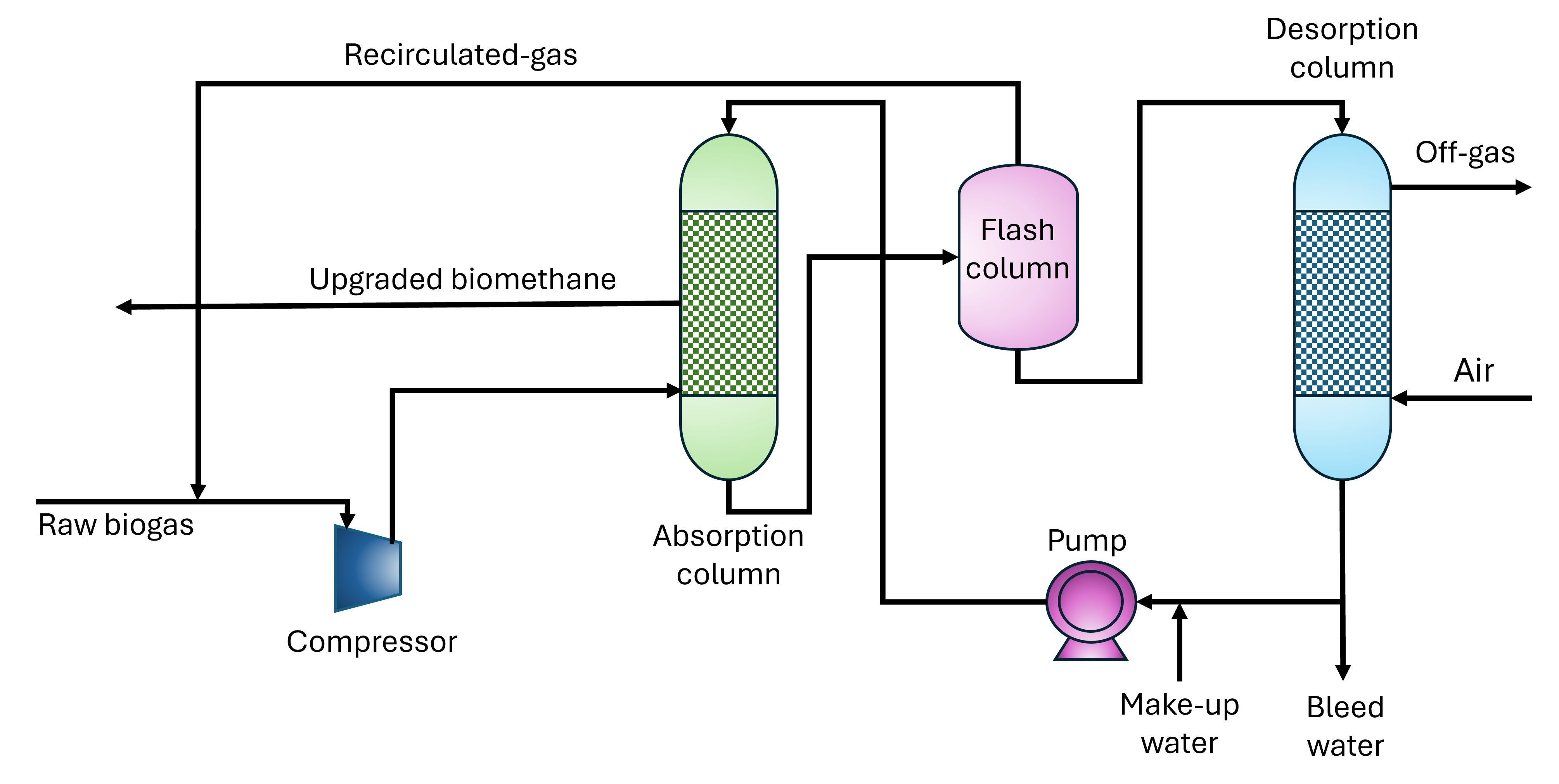
Water scrubbing is one of the most widely used upgrading technologies because it is simple and commercially mature. It works on the principle that carbon dioxide is much more soluble in water than methane, allowing CO2 or H2S to be absorbed selectively into the liquid phase (Fig. 5). Its main advantages are operational simplicity, no chemical solvent requirement, and relatively low technical risk.14, 18, 19, 27 However, after CO2 removal, a drying step is required to remove moisture before the biomethane can reach up to 99% purity.
The main disadvantages are high water consumption, possible methane losses, and the need for wastewater handling or water recycling. The regeneration step is crucial for this upgrading technology due to the large quantities of water that are required. Performance can also decline if the raw biogas contains high levels of impurities or if the system is poorly controlled. Despite these limitations, water scrubbing remains attractive for many plants because it offers a practical balance between cost and performance.14, 18, 19, 27, 41, 42
Chemical scrubbing
Chemical scrubbing, often based on amine solvents (e.g. MEA, DEA), removes carbon dioxide through a reversible chemical reaction between CO2 and the solvent. This method can produce high methane purity and low methane losses, which makes it suitable when strict product specifications are needed. It is also effective for treating gas streams with relatively high CO2 loading.14, 19, 27 By applying this technology, the final methane content in the output gas can reach > 98% purity due to the fact that the chemical reaction is strongly selective and thus the methane loss can be even lower than 0.1%. However, chemical scrubbing requires solvent regeneration where the CO2 is desorbed by heat, which increases energy demand and operating complexity. It may also involve corrosion, solvent degradation, and higher maintenance requirements compared with water scrubbing. For these reasons, its use is often justified only when product quality or plant conditions support the additional cost.14, 19, 26, 27, 43
Cryogenic separation
This technology upgrades biogas by cooling it to extremely low temperatures (around -90°C) so that CO2 and other components condense or freeze at different temperatures. A major advantage is the ability to produce very high purity biomethane and recover CO2 as a separate product. This can be valuable when CO2 utilisation or liquefaction is economically attractive.14, 19, 27 The disadvantages are high energy demand, expensive equipment, and operational complexity. Because of these factors, cryogenic separation is generally less suitable for small-scale installations. It is more appropriate where high purity and product recovery justify the additional cost.6, 14, 19, 26, 27
Biological conversion of CO2 to CH4
Biological upgrading, especially hydrogenotrophic methanation, converts CO2 to methane using microorganisms and hydrogen as an energy source. This method is attractive because it avoids some of the separation problems associated with physical and chemical systems and can directly increase methane content. It also supports coupling with renewable hydrogen and power-to-methane systems.16, 27 The main advantages are low chemical use, potentially lower environmental impact, and the direct conversion of CO2 into useful methane. However, most of these technology configurations have so far only been demonstrated experimentally and remain at an early stage of pilot or full-scale implementation. For this reason, it is promising but still less commercially established than conventional upgrading technologies.13, 14, 16, 27
Comparison of different upgrading techniques
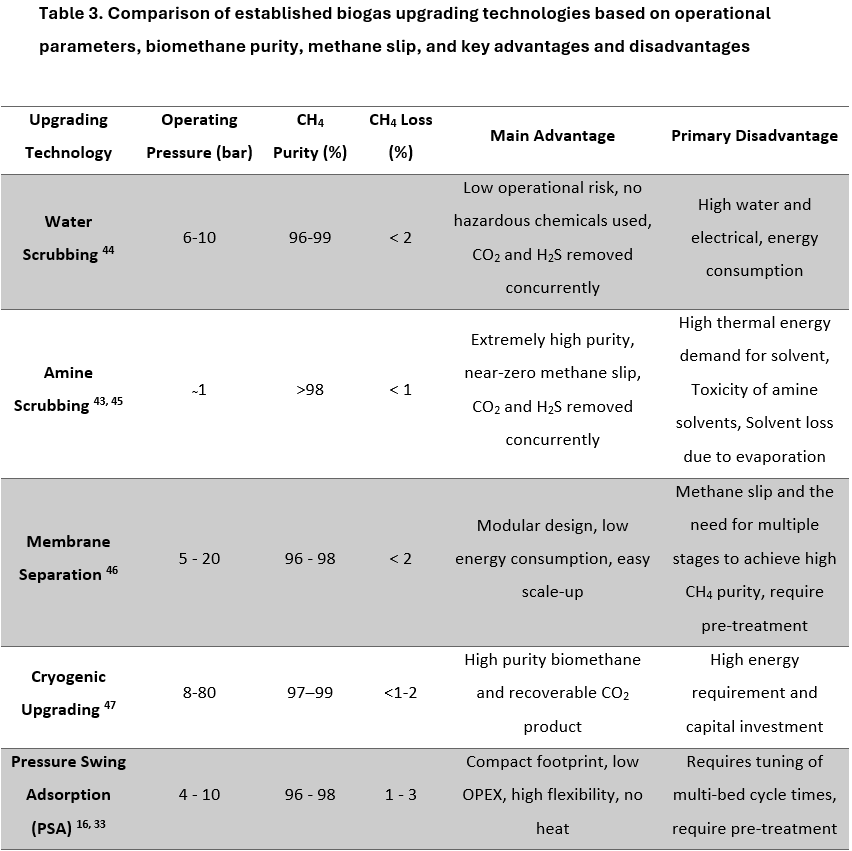
Among commercially deployed upgrading technologies, water scrubbing remains the most widely used globally, followed by pressure swing adsorption, chemical (amine) scrubbing, membrane separation, organic physical scrubbing, and cryogenic separation, in roughly that order of prevalence.4 Technology choice is shaped by plant scale, gas composition, end use and cost: small and medium-sized plants often favour compact membrane or PSA systems, while larger facilities may use scrubbing or cryogenic systems where higher purity or CH4 recovery is required (Table 3). In practice, hybrid configurations are also common, combining pretreatment, desulfurisation, drying, and a main CO2 separation unit to meet product specifications efficiently. 14, 27, 32
Looking ahead, the clearest opportunities lie in the innovations, which have the potential to reduce energy consumption and operating costs while maintaining high biomethane quality. Continued advances in material development, process optimisation, and techno-economic analysis will be essential for making renewable natural gas production more efficient, reliable, and commercially scalable.
Valorisation of the CO2 byproduct from biogas upgrading
The CO2 separated during biogas upgrading is "biogenic CO2" and can be captured for commercial use rather than vented, creating a secondary revenue stream. Before use, the CO2 off-gas must be purified: trace methane is catalytically oxidised to CO2 and water, volatile organic compounds and odours are removed, and the gas is deeply filtered before compression and liquefaction. Commercial applications include: (i) food and beverage (food-grade CO2 for drink carbonation and food preservation), (ii) industrial use (welding shielding gas, pH control in water treatment, and enhanced plant growth in greenhouses), (iii) dry ice production for industrial cleaning and refrigeration, and (iv) power-to-gas (methanation), where captured CO2 is reacted with green hydrogen in a biological or catalytic reactor to produce additional synthetic methane, maximising the energy output of the biogas plant.12, 48, 49
Where biogenic CO2 is instead captured and permanently stored, typically via injection into geological reservoirs, rather than sold for utilisation, it can generate carbon credits under bioenergy with carbon capture and storage (BECCS) frameworks. Because the carbon was already removed from the atmosphere during biomass growth, permanent storage represents genuine negative emissions, distinguishing it from the CO2-utilisation pathways above, most of which only avoid emissions rather than remove them. BECCS-based removal credits have become one of the highest-volume categories of durable carbon removal sold globally, commanding a substantial price premium over conventional emissions-avoidance credits due to their verified permanence.50
Conclusions
Raw biogas is a variable, impurity-laden gas whose exact composition depends on its source, and no single technology can bring it to biomethane or RNG specification on its own. As shown throughout this review, biomethane production is therefore best understood as a staged gas-conditioning process: pretreatment removes trace components and impurities before a dedicated upgrading step separates mainly CO2 and, where necessary, nitrogen and oxygen.
Among the commercially available upgrading technologies, water and chemical scrubbing, adsorption and membrane separation are all mature and widely deployed, with the choice between them driven largely by plant scale, gas composition and target purity rather than any one technology being universally superior. Nitrogen removal remains the clearest exception to this maturity: because it behaves similarly to methane in conventional separation processes, its rejection is disproportionately costly and is best avoided at the source wherever possible.
References
- Fairbrother, M.; Sevä, I.J.;Kulin, J. Global Environmental Change 2019, 59, 102003.
- Wang, J.; Azam, W. Geoscience frontiers 2024, 15(2),101757.
- Amponsah, N.Y.; Troldborg, M.; Kington, B.; Aalders, I.; Hough, R.L. Renewable and Sustainable Energy Reviews 2014, 39, 461–75.
- Angelidaki, I.; Treu, L.; Tsapekos, P.; Luo, G.; Campanaro, S.; Wenzel, H. et al. Biotechnology advances 2018, 36(2), 452–466.
- IEA series. 2025 Paris. https://www.iea.org/reports/outlook-for-biogas-and-biomethane.
- Awe, O.W.; Zhao, Y.; Nzihou, A.; Minh, D.P.; Lyczko, N. Waste and Biomass Valorization. 2017, 8(2), 267–283.
- Karne, H.; Mahajan, U.; Ketkar, U.; Kohade, A.; Khadilkar, P.; Mishra, A. Materials Today: Proceedings 2023, 72, 775–86.
- Javad Asgari, M.; Safavi, K.; Mortazaeinezahad, F. International Conference on Food Engineering and Biotechnology IPCBEE IACSIT Press, Singapore, 2011.
- Tsai, W-T. Renewable and Sustainable Energy Reviews 2007, 11(2), 331–344.
- Sikosana, M.L.; Sikhwivhilu, K.; Moutloali, R.; Madyira, D.M. Procedia Manufacturing 2019, 35, 1018–1024.
- Mutungwazi, A.; Mukumba, P.; Makaka, G. Renewable and Sustainable Energy Reviews 2018, 81, 172–80.
- Liangcheng Yang, Y.L. 2014; Ohio State University Extension. https://ohioline.osu.edu/factsheet/AEX-653.1-14.
- Antukh, T.; Lee, I.; Joo, S.; Kim, H. Frontiers in bioengineering and biotechnology 2022, 10, 833482.
- Muñoz, R.; Meier, L.; Diaz, I.; Jeison, D. Reviews in Environmental Science and Bio/Technology 2015, 14(4), 727–759.
- Paglini, R.; Gandiglio, M.; Lanzini, A. Energies 2022, 15(10), 3551.
- Sun, Q.; Li, H.; Yan, J.; Liu, L.; Yu, Z.; Yu, X. Renewable and sustainable energy reviews 2015, 51, 521–532.
- Petersson, A.; Wellinger, A. IEA bioenergy 2009, 20, 1–19.
- Das, J.; Ravishankar, H.; Lens, P.N. Journal of Environmental Management 2022, 304, 114198.
- Papadias, D.; Ahmed, S. NREL/DOE Biogas and Fuel Cells Workshop, 2012. pp. 11–13.
- Ahmed, S.F.; Mofijur, M.; Tarannum, K.; Chowdhury, A.T.; Rafa, N.; Nuzhat, S. et al. Environmental Chemistry Letters 2021, 19(6), 4137–4164.
- Pawłowska, M.; Zdeb, M.; Bis, M.; Pawłowski, L. Energies 2025, 18(10), 2660.
- Golmakani, A.; Ali Nabavi, S.; Wadi, B.; Manovic, V. Fuel 2022, 317, 123085.
- Vrbová, V.; Ciahotny, K. Energy & Fuels 2017, 31(9), 9393–9401.
- Ryckebosch, E.; Drouillon, M.; Vervaeren, H. Biomass and bioenergy 2011, 35(5),1633–1645.
- Seong, M.S.; Kong, C.I.; Park, B.R.; Lee, Y.; Na, B.K.; Kim, J.H. Chemical Engineering Journal 2020, 384,123342.
- Bauer, F.; Persson, T.; Hulteberg, C.; Tamm, D. Biofuels, Bioproducts and Biorefining 2013, 7(5), 499–511.
- Francisco López, A.; Lago Rodríguez, T.; Faraji Abdolmaleki, S.; Galera Martínez, M.; Bello Bugallo, P.M. Applied Sciences 2024, 14(6), 2342.
- Mohammadpour, H.; Cheng, K.Y.; Pivrikas, A.; Ho, G. Water Science & Technology 2025, 91(2), 93–116.
- Silva, J.R.; Quinta-Ferreira, R.M.; Castro, L.M. Sustainability 2025, 17(11), 4802.
- Baena-Moreno, F.M.; le Saché, E.; Pastor-Pérez, L.; Reina, T.R. Environmental Chemistry Letters 2020, 18(5), 1649–1658.
- Abejón, R.; Torre-Celeizabal, A.; Casado-Coterillo, C.; Garea, A. ACS Sustainable Chemistry & Engineering 2024, 12(3), 1297–1308.
- Golmakani, A.; Nabavi, S.A.; Wadi, B.; Manovic, V. Fuel 2022, 317, 123085.
- Kohlheb, N.; Wluka, M.; Bezama, A.; Thrän, D.; Aurich, A.; Müller, RA. BioEnergy Research 2021, 14(3), 901–909.
- Zafanelli, L.F.; Aly, E.; Henrique, A.; Rodrigues, A.E.; Silva, J.A. International Conference on Nanotechnology for Sustainable Living and Environment 2022. Springer. pp. 77–87.
- Wang, Q.; Yang, W.; Niu, Y.; Min, X.; Wang, S.; Wang, G. et al. Chemical Engineering Journal 2025, 519, 164971.
- Jangodaz, E.; Telfer, S.G. Adsorption 2026, 32(5), 31.
- Melas, G.A.; Habtu, N.G.; Worku, A.K.; Getahun, E. BioEnergy Research 2025, 18(1), 80.
- Rainone, F.; D’Agostino, O.; Erto, A.; Balsamo, M.; Lancia, A. Journal of Environmental Chemical Engineering 2021, 9(5),106256.
- Ghasemi, M. Proceedings of the 17th Greenhouse Gas Control Technologies Conference (GHGT-17), 2024. pp. 20–24.
- Jangodaz, E.; Telfer, S. Proceedings of the 17th Greenhouse Gas Control Technologies Conference (GHGT-17), 2024. pp. 20–24.
- Lombardi, L.; Francini, G. Renewable Energy 2020, 156, 440–458.
- Cozma, P.; Ghinea, C.; Mămăligă, I.; Wukovits, W.; Friedl, A.; Gavrilescu, M. CLEAN–Soil, Air, Water 2013, 41(9), 917–927.
- Cavaignac, R.S.; Ferreira, N.L.; Guardani, R. Renewable Energy 2021, 171, 868–880.
- EA. Paris. Bioenergy, I. 1999.
- Weiland, P. Applied microbiology and biotechnology 2010, 85(4), 849–860.
- Allegue, L.B.; Hinge, J.; Allé, K. Danish Technological Institute 2012, 5, 97.
- Knapik, E.; Kosowski, P.; Stopa, J. Chemical Engineering Research and Design 2018, 131, 66–79.
- Cordova, S.S.; Gustafsson, M.; Eklund, M.; Svensson, N. Journal of Cleaner Production 2022, 370, 133498.
- Theodoropoulou, A.; Bagaki, D.A.; Gaspari, M.; Kougias, P.; Treu, L.; Campanaro, S. et al. Sustainability 2025, 17(22), 10385.
- Wong, M.J.K.; Han, S.; Park, S.-E.; Roh, H.Y.;Kuppusamy, M.; Oh, J.-W. et al. Renewable and Sustainable Energy Reviews 2026, 232, 116832.